Schedule a Consultation
216-480-4620Schedule a Consultation
216-480-4620
When a newborn is diagnosed with a brain injury, the questions come fast and they are devastating: “What happened? Could it have been prevented? Who is responsible?” For families navigating this painful reality, understanding the medical science behind neonatal brain injuries is often the first step toward finding answers. These cases require careful analysis of imaging, clinical data, and pathology records, all of which can point to when and how an injury occurred.
At The Becker Law Firm, our Cleveland birth injury attorneys work alongside medical experts to review every piece of available evidence and determine whether a deviation from the standard of care contributed to a child's injury. If your family is facing a diagnosis tied to events around the birth of your child, we encourage you to call us today at 216-480-4620 for a free case evaluation.
Hypoxic-ischemic encephalopathy, commonly referred to as HIE, is a type of neonatal brain injury caused by insufficient oxygen and blood flow to a newborn's brain around the time of birth. It is one of the leading causes of long-term neurological impairment in infants.
When brain cells are deprived of oxygen, they can sustain damage that leads to lasting conditions, including:
The severity of these outcomes depends on how long oxygen deprivation lasted, how quickly it was recognized, and whether appropriate interventions were initiated in time.
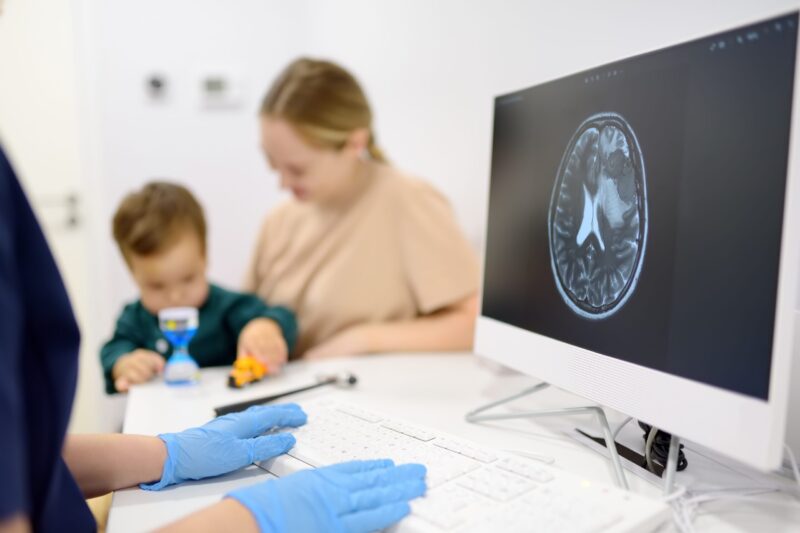
One of the most critical tools in evaluating a neonatal brain injury case is magnetic resonance imaging. An MRI allows clinicians and medical experts to identify the pattern of brain injury, which in turn helps establish when the injury most likely occurred.
Two patterns are particularly significant in HIE analysis:
Radiologic findings alone do not tell the whole story. When combined with clinical history, delivery records, and fetal monitoring data, imaging becomes a cornerstone of expert causation opinions in birth injury litigation.
Your child’s birth record is one of the most important documents in any HIE case. Certain clinical markers are closely associated with oxygen deprivation at or near the time of delivery, including:
When these findings are present in the record, attorneys and medical experts look closely at how the care team responded. A failure to appropriately interpret fetal heart rate monitoring, a delay in ordering an emergency cesarean section, or a slow response to signs of fetal distress can each represent a team that potentially shied away from the accepted standards of obstetric care.
Our Ohio birth injury attorneys are experienced in reviewing labor and delivery charts, nursing notes, and physician orders to identify where the timeline may have broken down. Give us a call at 216-480-4620 to find out more about how we help families who have suffered avoidable birth injuries.
Therapeutic hypothermia, also called cooling therapy, is a neuroprotective treatment used for newborns diagnosed with moderate to severe HIE. The treatment works by lowering the infant's core body temperature to slow the cascade of secondary cell death that follows an initial hypoxic injury.
For cooling therapy to be effective, it generally needs to be started within six hours of birth. Accepted clinical protocols also require that infants meet specific eligibility criteria before treatment begins.
We can help by evaluating whether a hospital:
Delays or failures in initiating cooling therapy, when a newborn was a qualifying candidate, may constitute a breach of the standard of care. If you believe your child's treatment was delayed or mismanaged, call The Becker Law Firm at 216-480-4620 to speak with a knowledgeable birth injury attorney.
Seizures are a common and serious consequence of neonatal brain injury. In newborns, seizures may not always present with the obvious convulsive movements seen in older children or adults, making continuous monitoring essential.
An electroencephalography (EEG) is typically used to detect abnormal electrical activity in the brain and assess the severity of neurological compromise.
EEG findings serve several important functions in a birth injury case:
In legal terms, early EEG and seizure documentation may help establish the nature and severity of a child's injury, which is foundational to calculating future medical costs, therapy needs, educational support, and quality-of-life impacts over a lifetime.
The placenta is a detailed record of a pregnancy's course, and pathological examination of the placenta can provide critical insight into what led to a neonatal brain injury.
Findings such as:
Placental pathology is most meaningful when interpreted alongside imaging and clinical data. Our Cleveland medical malpractice lawyers work with experienced perinatologists and pathologists to ensure that every available piece of evidence is properly evaluated and integrated into a cohesive case narrative.
In birth injury litigation, the strength of a causation opinion rests on the completeness of the medical record review. A thorough evaluation typically includes:
Each of these documents may contain details that support or contradict a negligence claim. Missing or altered records can become significant in litigation.
Our birth injury attorneys at The Becker Law Firm have the experience and medical knowledge to assemble these records, identify deviations from accepted standards of care, and present a clear and credible case with the support of qualified medical experts.
If your child has been diagnosed with HIE, cerebral palsy, or another condition linked to events at birth, it is worth exploring whether a preventable medical error played a role. Situations that may give rise to a birth injury malpractice claim include:
Ohio law sets time limits for medical malpractice claims, and the rules for birth injury cases can be complicated. In Ohio, most birth injury claims must be filed within one year from when the injury is discovered. However, Ohio law “tolls” (pauses) the deadline for minors in medical malpractice cases, so you may have until the child’s 19th birthday to file a claim.
The Becker Law Firm offers free consultations to families evaluating potential birth injury claims. Our attorneys represent clients throughout Ohio and are committed to helping families understand what happened and what they may be entitled to recover. We have brought justice to our clients for decades, securing positive case results that have changed our clients’ lives. Contact us today at 216-480-4620 to get started with a free, confidential consultation.